
Asbestos Roof Removal
Is my roof asbestos? How to tell, and what to do next
Published 12 October 2026
Short answer
A grey corrugated cement roof fitted before South Africa's 2008 asbestos ban may contain asbestos, but asbestos-free fibre cement looks almost identical. Only a laboratory test on a small sample confirms it, and until then do not drill, cut, pressure-wash or walk on the roof.
Free quote in Bellville
Tell us what's going on and we'll take it from there — no pressure.
Asbestos cement was one of the most common roofing materials in South Africa for decades. It was cheap, durable and fire-resistant, and it was used on houses, garages, carports and outbuildings across Bellville, Parow, Goodwood and the rest of the Northern Suburbs. South Africa banned asbestos in 2008, so a roof put on before then could contain it. That doesn't mean it does.
The usual signs
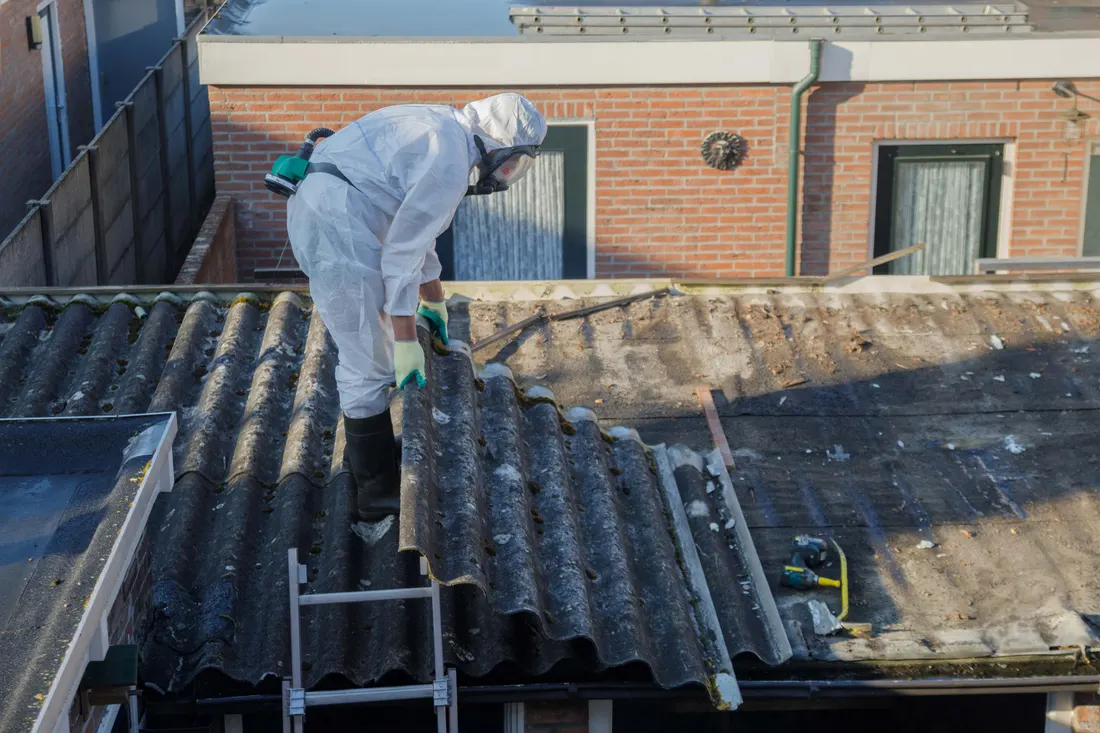
Asbestos cement roofing is typically grey, unpainted or painted corrugated sheeting with a wide, deep profile, often weathered and slightly rough on the surface. Older sheets can have lichen or moss growth and dark streaks. Gutters and downpipes on the same house may be made of the same grey cement material. Inside, older flat ceiling boards and eaves boards can also contain asbestos.
The catch is that asbestos-free fibre cement, which replaced it, looks almost identical. Many manufacturers switched to asbestos-free products before the 2008 ban, so the age of the house is a clue, not proof.
What not to do while you find out
Don't drill, cut, sand or break the sheets. Don't pressure-wash the roof: high-pressure water strips the weathered surface and washes fibres into gutters, drains and the garden. Don't walk on it either. Old cement sheeting is brittle, and people are injured every year falling through roofs like this. Simply living under an intact asbestos roof isn't the risk; disturbing it is.
Free quote in Bellville
Tell us what's going on and we'll take it from there — no pressure.
When to test
If the roof is intact and you're not planning any work, you don't need to rush. A test is worth doing when you're about to renovate, re-roof, sell, or when sheets are cracked and you need to know how to deal with them. A laboratory test on a small sample is the only way to be certain, and the sample should be taken by someone who knows how to do it without spreading fibres.
What happens next
If the test is negative, it's an ordinary fibre-cement roof and any roofer can work on it. If it's positive, you have three realistic options: leave it alone if it's in good condition and nothing is planned, have damaged sections removed and replaced, or replace the whole roof. Any removal has to be done by a registered asbestos contractor under the Asbestos Abatement Regulations, and the waste has to go to a licensed disposal site.
Key points
- Roofs installed before South Africa's 2008 ban may contain asbestos, but fibre cement looks almost identical
- Never cut, drill, pressure-wash or walk on a suspected asbestos roof
- A laboratory test on a sample is the only way to be sure
- Intact, undisturbed asbestos is low risk; disturbing it is what releases fibres
Ready to get this sorted?
Free quotes, no pressure. Tell us what's going on and we'll take it from there.